Translate

Saturday, February 15, 2025

Entry 9: From my Stash Vintage Classic 1/48 Nakajima A6M2-N from Tamiya


Today's entry from my stash is the Vintage Classic 1/48 Nakajima A6M2-N from Tamiya. Release in 1973 in 1/48 scale. It represented a scale model of the floatplane variant of the famous Mitsubishi A6M Zero. Tamiya re-release this kit again in 2002 in the propeller action series and again in 2008 with the 4x4 Light Vehicle Type 95 Kurogane & Maintenance Crew which makes it an interest set with huge diorama potential.

Tamiya 1:48 Scale Nakajima A6M2-N Rufe Aircraft Model Kit

The A6M2-N was designed for use in naval operations, particularly as a reconnaissance or escort aircraft in areas where land-based airstrips were not available. This was especially so, in the pacific when Japan have island hopped and occupied their way in the pacific. The model kit was easy to construct and comes with 2 figures, bombs and a stand. Painted in Tamiya Acrylic Aluminum Colour and Weathered with enamels. 

3/4 Top View 

Close up

Side view


COLOUR SCHEMES

some what interesting in this colour

Standard Japanese Army scheme

Standard Naval scheme

As such, the historical  1/48 Nakajima A6M2-N has been the subject released of many Scale model makers, latest being from Eduard adding this kit with modern improvements to their line up which will tickle the fancy of Japanese aircraft scale modellers with their well know Eduard details.


Tamiya Extra Thin Cement (Quick-Setting) T87182


1/48 Nakajima A6M2-n Ki-seaplane fighter No. 452 Squadron


Friday, February 14, 2025

Entry 8: Tamiya 1:48 Scale F-16CJ Block 50 Fighting Falcon Aircraft Model Kit


The F-16CJ Block 50 Fighting Falcon is a variant of the F-16 Fighting Falcon, a multi-role fighter aircraft developed by General Dynamics (now Lockheed Martin). The F-16CJ is part of the Block 50 series, which represents a series of upgrades and improvements over earlier models, particularly in avionics, weaponry, and mission capabilities.

Key Features of the F-16CJ Block 50:

Role: The F-16CJ is primarily a suppression of enemy air defenses (SEAD) aircraft, designed to target and disable enemy radar and surface-to-air missile (SAM) systems. It is used in tactical operations to help clear the way for other aircraft to operate safely by neutralizing threats from air defense systems.

Engine: The Block 50 variant is powered by the Pratt & Whitney F100-PW-229 engine, providing greater thrust and improved reliability over earlier engines, which contributes to better performance in high-demand operations.

Avionics and Radar: One of the main upgrades in the Block 50 is its AN/APG-68(V)9 radar, which provides enhanced range and resolution compared to older systems. The radar supports air-to-air and air-to-ground missions. The Block 50 also includes improved electronic warfare (EW) systems for SEAD missions.

Weapons and Payload: The F-16CJ Block 50 is equipped with a wide variety of precision-guided munitions, including the AGM-88 HARM (High-speed Anti-Radiation Missile), which is a key component in its SEAD role. It also supports air-to-air missiles like the AIM-120 AMRAAM and air-to-ground weapons such as GBU-12 Paveway II laser-guided bombs.

Upgraded Cockpit: The cockpit of the Block 50 variant features a glass cockpit with advanced displays, which allow pilots to manage multiple targets and threats simultaneously. This includes a multi-function display (MFD) for better situational awareness and easier integration of sensors and weapons.

Tamiya 1:48 Scale F-16CJ Block 50 Fighting Falcon Aircraft Model Kit


Accessories Options

Hasegawa 1:48 Scale U.S Aircraft Weapons E Model Kit 


Monday, February 10, 2025

Entry 7: The case of a more powerful Sturmtiger?

 Tiger tanks and their variants are well known throughout the modelling world as one of the must built, especially for AFV modellers. This was the case for the Sturmmörserwagen 606/4 mit 38 cm RW 61 otherwise known as the STRUMTIGER. The rare variant released initially as resin kits in 1987 and 1990 and was followed by the first release in plastic by Tamiya in 1994. Kit Number 35177 was a sensation back in the mid 90s in terms of quality, it reigned supreme until AFV Club's release 12 years later.

Tamiya 1:35 Scale German Assault Mortar Sturmtiger Model Kit, 38 cm

Two was purchased in Hong Kong back in 1997, together with turned aluminium mortar shells and a edurard PE set. These sat on storage until mid January 2025 (29 years!) until i decided to have a crack at it. I 've to admit what put me off all these years was the photo etch set and the need to want it done correctly. Rye Field model released its beautiful version in 2018 was also a kick in the pants to start so stash built. With the rising cost of model kits, what better idea to save money and build those kits purchased. 

Therefore, i set about motivating myself to start..... part of me does not want a stock built. How do i make it interesting?

The Sturmtiger armed with a 380mm RW61 mortar on a Tiger I chassis was a German assault gun used for urban fighting. Built byAlkett  or (Altmärkische Kettenwerk GmbH), a German company that played a significant role in the development and production of armored vehicles during World War II such as the Sturmgeschütz III and IV and of course, the Sturmmörser Tiger.

Coming back to the kit, i decided to research more about the fearsome 380mm RW61 rocket-propelled mortar. ..."The barrel was radically different in design to other guns, with a cast outer body and a liner inside made from steel about 12 mm thick. Into this liner were cut nine rifling grooves into which splines on the rocket would sit and then rotate during firing."... "together with the splines which went into the rifling of the gun caused the shell to rotate clockwise in flight for stability."... (Source: https://tanks-encyclopedia.com/ww2/nazi_germany/sturmtiger.php)  And hence since barrel length affects accuracy and flight stability of a shell round. IT will be interesting to see a Sturmtiger with a lengthen barrel. 

The first bit was to create the length mortar using a surplus barrel saw off using a razor saw. The two part was taped down before gluing them together.


Lengthen Mortar Barrel
Compared to the Orignal Mortar Barrel.

With the modification completed, its to to add the Photo Etch to the select location and paint the interior and weathered them to give a used look.


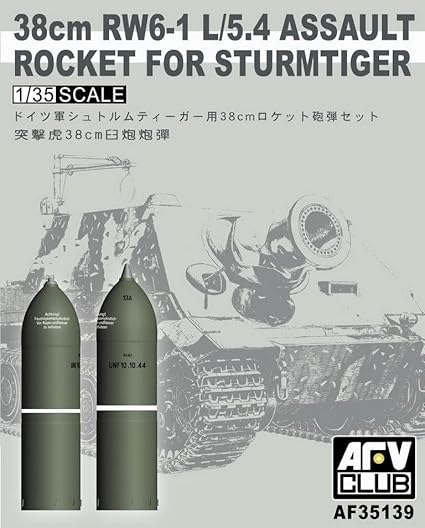
AFV Club 1/35 38cm RW6-1 L/5.4 Assault Rocket for Sturmtiger Plastic Model Kit


1/35 Resin Figure Model GK Kits Sturmtiger Crew 5 Soldier Unassembled and Unpainted kit


Interior 

Model Casten SK-3 1/35 Tiger I Tank Track Transportation Movable

Friday, January 10, 2025

Entry 6: The Hobby cave. Making the best for any situation


The "Cave"

All hobbies of the world, they all have three factors in common, tools, space and storages. Tools used for your hobby, Space to use or display your hobby and Storage to store your hobby. 

Whether it is collecting hobby horses, fixing up RC cars or building model kits. We all have a need to cosider these three commonality factors, in order to enjoy our craft. Today, I would like to share my journey of how I kept and organise tools, space and storage for my hobby. 

Living in public housing in space limited Singapore has and is still challenging at times. As a student starting out on building scale models, My craft tools were then a bottle of Tamiya glue, fingernail file and fingernail cutter. (Technically, I only owned the glue). Worked like a charm for a start, enabling to remove the parts and put them together completely. Model kits like Airfix’s 1/72 Sea King, Academy F-4F Phantom II Fighter 1/144 and Tamiya 1/35 Panzer II were notable pieces built and placed in a small corner of my parent’s shelf.

Moving to a bigger apartment in 1985, opened new opportunities for the craft. Amid the storage space and my bedroom, I had a table and SPACE to expand. Visiting hobby shops and hobby stores had a purpose with the pocket monies saved. This is when i ventured into painting my built models, firstly with hand brushes and then years later, airbrushes. Tools stayed the same and kit storage went under the bed and displays, above my bookshelves. Typical and quickest way to organise any room.

For others, space will be adequate if one have a huge house or choose to remain single, others are empty nesters with children moving out. All these situations allow the hobby enthusiast opportunities to rethink, revamp their hobby tools, space and storages for them to throughly enjoy their space and their hobby. Ultimately, the message here is to mak the best for any situation to create space for your hobby.

My current hobby cave is located in the garage with all i require to build and paint and store my scale models kits. There seems to be an ever increasing amount of tools for scale modelling. Personally, i think a good set of tools and equipement is and will be suffice to create good built. Some basic but essential tools, that's long term companion for my built.

  • Thin Cement
  • Normal Cement
  • Cutting mat 
  • Circular cutter
  • Utility cutter
  • Steel rule
  • Pin Vise and drill bit
  • Badger Air Brush
  • Air compressor and tank
  • Spray Booth
  • Sets of colours Arcylics
  • Lighting
Maintaining, space and storages for my hobby. 
Given my situation unlikely to change. I did take steps to cut down on the amount of stash,  mainly, donating them to charity organisation to resell them. Other ways to managed the stash included selling existing stashed kits before purchasing a new one? This is a great way to fund a new kit, by selling the one bought out of bad decision.

Stash and displays
Mixing your own colours  is also one way to save on space. Using a colour wheel, some many colours can be created from primary colours or base colours. Is there a need to buy the exact colour why not make it your own colour tone and shades for modulation.

Is there a cheaper alternative? There are always alternatives to tools, space and storage. Cutters for example, are also available at stationary stores at a fraction of the price, Display spaces can be re-organise to go vertically up and completed model kit storage be in stackable boxes. They can be then rotated in the display shelves, giving it purposes.

Keeping to a budget can also be a great way to control space and storage. Challenge yourself to dollar figure per month spent on scale models and soon hopefully, it becomes 2nd nature without (FOMO) the fear of missing out.....

Finally, start building your stash- Why wait? Did you buy them to build or to possess it? Build your stash!

Therefore, making the best of a situation through ways of keeping your tools (and paints) to a neccessity,  clever display spaces and rotating built models and storage vertically and occasionally de-cluttering them through selling unmade ones can keep the hobby alive without the dilemmas of life.

Essential tools for the 'Trade'
Tamiya Extra Thin Cement (Quick-Setting) T87182

Revell Liquid Contacta Professional Glue 25 g

Self Healing Colourful Cutting Mat

Cutters

Complete Professional Airbrush Compressor kit Multi-Purpose Airbrushing System with Air Tank

Airbrush Spray Booth Kit,Adjustable Powerful Fan and LED Lights,


Tuesday, January 7, 2025

Entry 5: Tamiya's (Kit# 35216) Early version German Tiger I Heavy Tank- Uncomplicated and yet satisfying project built.


Tamiya Scale Model -  German Tiger I Tank- Early version (Kit# 35216)

Of all scale model kits producers of the world, Tamiya model kits are still in the forefront of innovation and subjects. This is especially so, for WWII german army subjects. I have built most of the motorised models of german tanks during my younger self; such as the Panther, Tiger I and Jadgtiger. Most were either unpainted or brush painted. The most memorable early models made in the 80s was the motorised model released of the Tiger I tank from 1970s with very bad figures by today's standards. These have now gone with the wind and ended as scraps parts.


1970s Tamiya Tiger I in 1/35 scale


1997 release Tamiya Tiger I Early


My Collections of reasonably priced Tamiya Tiger I included, 2 x SturmTiger; 1 x Steel wheel Late version Tiger I and this Early version Tiger I (Kit number 35216). Nostalgia led me to start kit 35216, First, was the construction of the Tiger fearsome 8.8cm KwK36 L/56 turned gun barrel from Aber. The set includes turned aluminium, brass and PE parts. A small counter fishing lead weight was added to bottom of the breech block to balance the weight of the barrel. Other add-ons included some Aluminum foil as canvas covers. these shaped easily and is held in place with super glue. An alternate to using foil is to us roll up and flaten some two-part putty from tamiya and lay over the required area.

Metal barrel and foil in place
The construction of the model kit was pretty much OOB. (Out of the Box) or so i thought. One thing led to the other with the need for more details. Some torsion and frame details were made (photo 1). This was followed by turret details using evergreen plastic. (Photos 2~4).

 
photo 1

 
photo 2

 
photo 3

photo 4

 
A mix of Tamiya acrylics and Vallejo colours was used to create the three-tone pattern. Raised areas were then painted with lighter tones green, browns, white+ buff+ dark yellow to modulate colours. Detailed parts were individually painted and then chipped with sponge to show some rough use in the field. (Photo 5~7) using Vallejo colours.

Photo 5

        
Photo 6
  

Photo 7
   
Photo 8
This was allow to dried before two coats of clear before working with artist oils on the scale model kit. The top surfaces received dry ground colours along edges and engine areas where mud and dust can collect. (photo 8). The same treatment was done on the turret horizontal surfaces but will less intensity. The spockets, idlers and road wheels received light coat of dust colours and then excess removed by stroking outwardly with a damp round brush damped with thinner. The tracks of this kit was the tradition rubber band type that can be  contacted by glue adhesive and not by melting the pins with some heated nail. Details on the tracks are quite good. The tracks were coloured first before gluing them together. A coat of red brown was used before using various brown tones mixed with small amounts of steel colour applied randomly on the tracks. Using Vallejo Model Air in Yellow and Rust. The watery paint was touched randomly on the tracks to further create a rusted characteristic on the track. Finally, enamel steel was drybrushed to highlight bare metal finishes.
Photo 9 shows a mixed of standard and late version steel wheels.

The end result was an easy and uncomplicated built with the emphasis on colour application, modulation, pin washing, weathering effects and stains to produce a satisfying experience building the legendary Tiger I heavy tank of the German Army.  Thank you Tamiya!
 
Tiger I heavy tank -Top Left view 
Tiger I heavy tank  - Top Right view

Tiger I heavy tank  - Side view

Tiger I heavy tank  - Three-quarter view
I will leaved you with the roar of  Tiger '131' from Dorset England until the next post.

The world's only operational Tiger I tank is Tiger 131, which is preserved at The Tank Museum in Bovington, Dorset, England: 

TAMIYA Range of German Tiger I Tanks

Tamiya Model kit 1/35 Scale German Tiger 1 Late Production